
Introduction
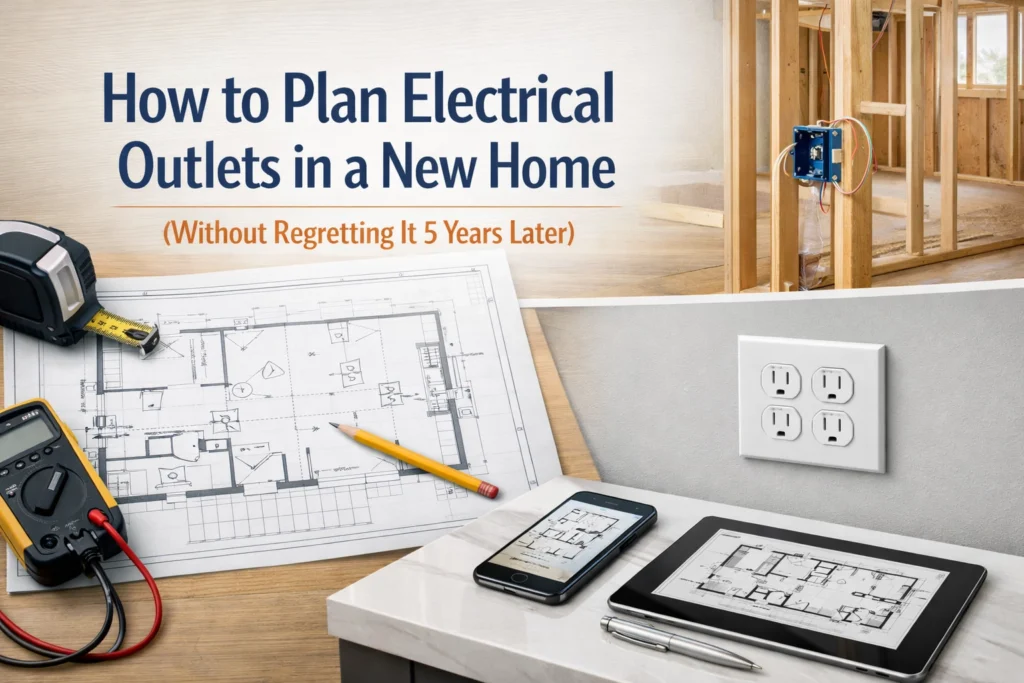
Electrical outlet placement represents one of the most overlooked aspects of new home construction. Homeowners frequently discover years after moving in that outlets are poorly positioned, insufficient in number, or incompatible with modern technology demands. Strategic outlet planning during the design phase prevents costly retrofits and ensures the electrical system accommodates both current needs and future requirements.
The investment in proper outlet planning pays dividends for decades. Building codes establish minimum standards, but these minimums rarely align with actual household usage patterns in 2026. The proliferation of home offices, electric vehicle charging, smart home devices, and outdoor living spaces demands electrical infrastructure that extends well beyond baseline code compliance.
Understanding National Electrical Code Requirements
The National Electrical Code (NEC) establishes foundational standards for outlet placement in residential construction. The primary rule states that no point along any wall should exceed six feet from an outlet. This translates to outlets positioned every 12 feet along continuous wall sections.
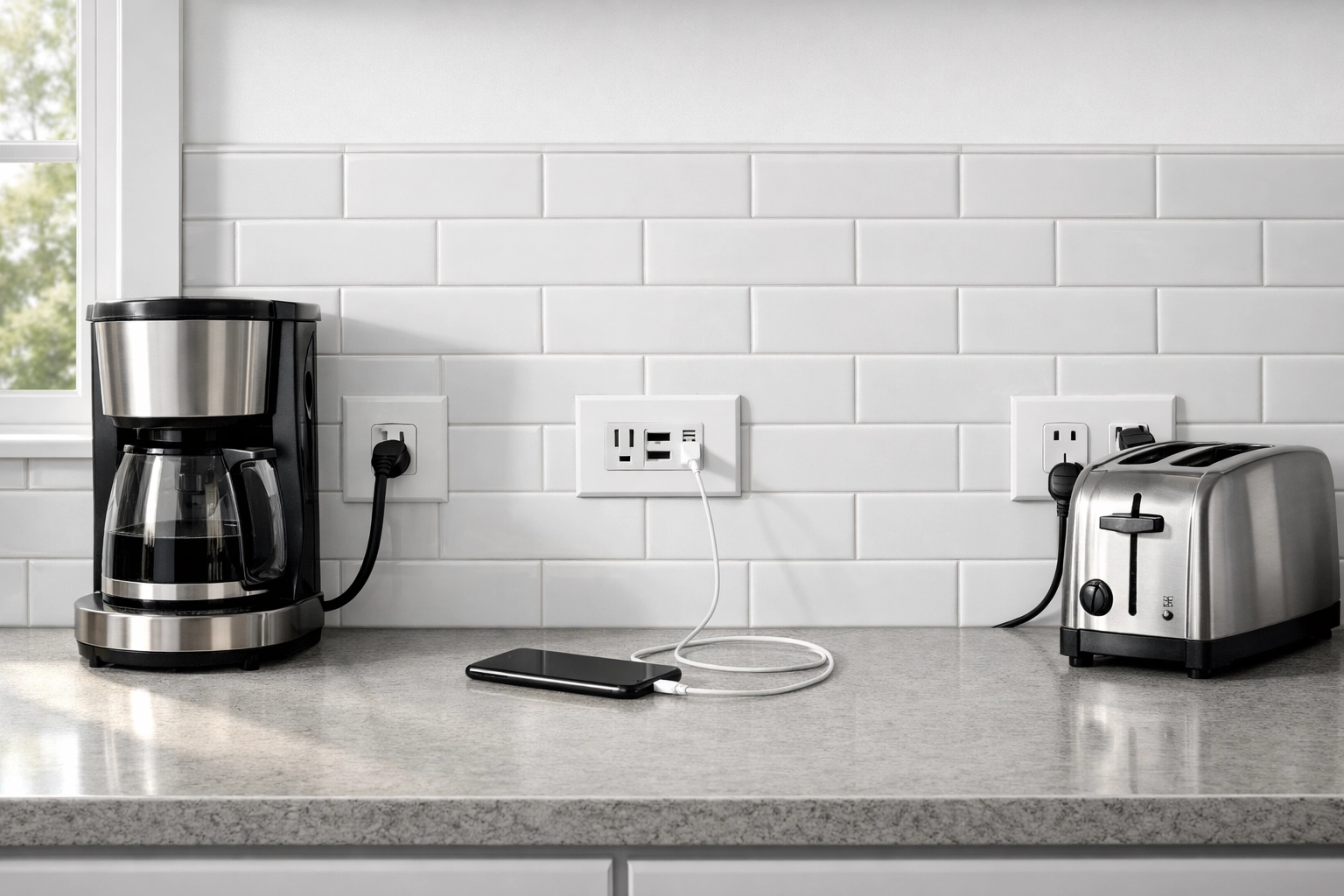
Specific rooms carry additional requirements. Kitchen countertops require receptacles above every section measuring 12 inches or wider, with at least one outlet within 24 inches of any point on the countertop surface. Hallways measuring 10 feet or longer must contain at least one outlet. Garages require a minimum of one outlet installed no higher than 5.5 feet above the floor.
Ground Fault Circuit Interrupter (GFCI) protection is mandatory for outlets in locations with water exposure. Bathrooms, kitchens near sinks, garages, basements, outdoor areas, and laundry rooms all require GFCI-protected receptacles. These code minimums represent the starting point, not the optimal configuration for modern living.
Kitchen and Dining Area Planning
The kitchen demands more electrical outlets than any other room in the home. Beyond the code-required countertop receptacles, modern kitchens benefit from additional outlets inside pantries for small appliances, under cabinets for task lighting, and within kitchen islands for countertop appliances.
Homeowners increasingly install charging stations within kitchen drawers or cabinets to eliminate visible device cords on countertops. Pop-up outlets that retract flush with countertop surfaces provide power access without disrupting the aesthetic. A dedicated 240-volt outlet accommodates electric ranges and high-power cooking appliances.
The dining area requires outlets for buffet servers, beverage stations, or table-side serving equipment. Floor outlets beneath dining tables eliminate cords stretching across walking paths. These outlets also support holiday lighting displays or specialized entertaining equipment.
Living Areas and Entertainment Spaces
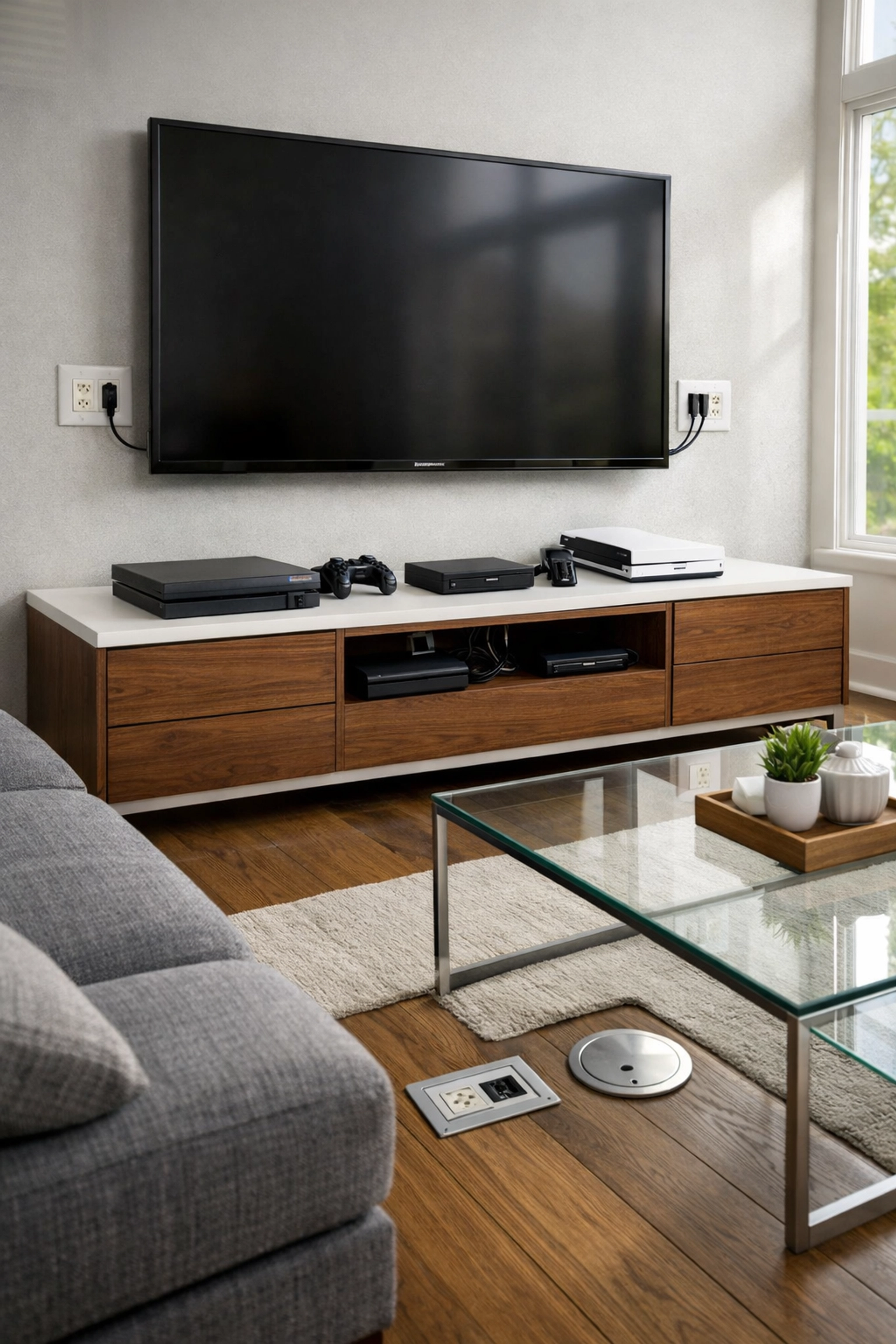
Living rooms require careful outlet planning around entertainment centers and seating arrangements. Television wall mounts necessitate recessed outlets that sit flush with the mounting bracket. Multiple outlets near entertainment centers accommodate media players, gaming consoles, streaming devices, and sound systems.
Seating areas benefit from outlets positioned on both sides of sofas and chairs for table lamps, phone chargers, and laptop use. Floor outlets placed strategically under furniture groupings eliminate visible cords while maintaining full functionality. Smart home hubs and voice assistants require consistent power access in central locations.
Increasingly, homeowners designate specific living spaces for gaming or home theater systems. These areas require dedicated circuits with multiple outlets to handle the power demands of high-end audio-visual equipment without circuit overload.
Bedroom Configuration
Bedrooms require outlets on both sides of the bed for nightstand lamps, phone chargers, and medical devices such as CPAP machines. Wall-mounted televisions need outlets positioned behind the mounting location. Additional outlets should accommodate dressers, desks, or vanity areas.
Master bedrooms often include sitting areas or reading nooks that require independent outlet configurations. Walk-in closets benefit from outlets for charging devices, powering vacuum systems, or operating garment steamers. Some homeowners install outlets inside nightstand drawers for completely hidden device charging.
Children's bedrooms require outlets positioned for evolving needs as the child ages. Computer desks, gaming stations, and study areas all demand multiple receptacles. USB outlets integrated into standard receptacles eliminate the need for charging adapters.
Bathroom Electrical Considerations
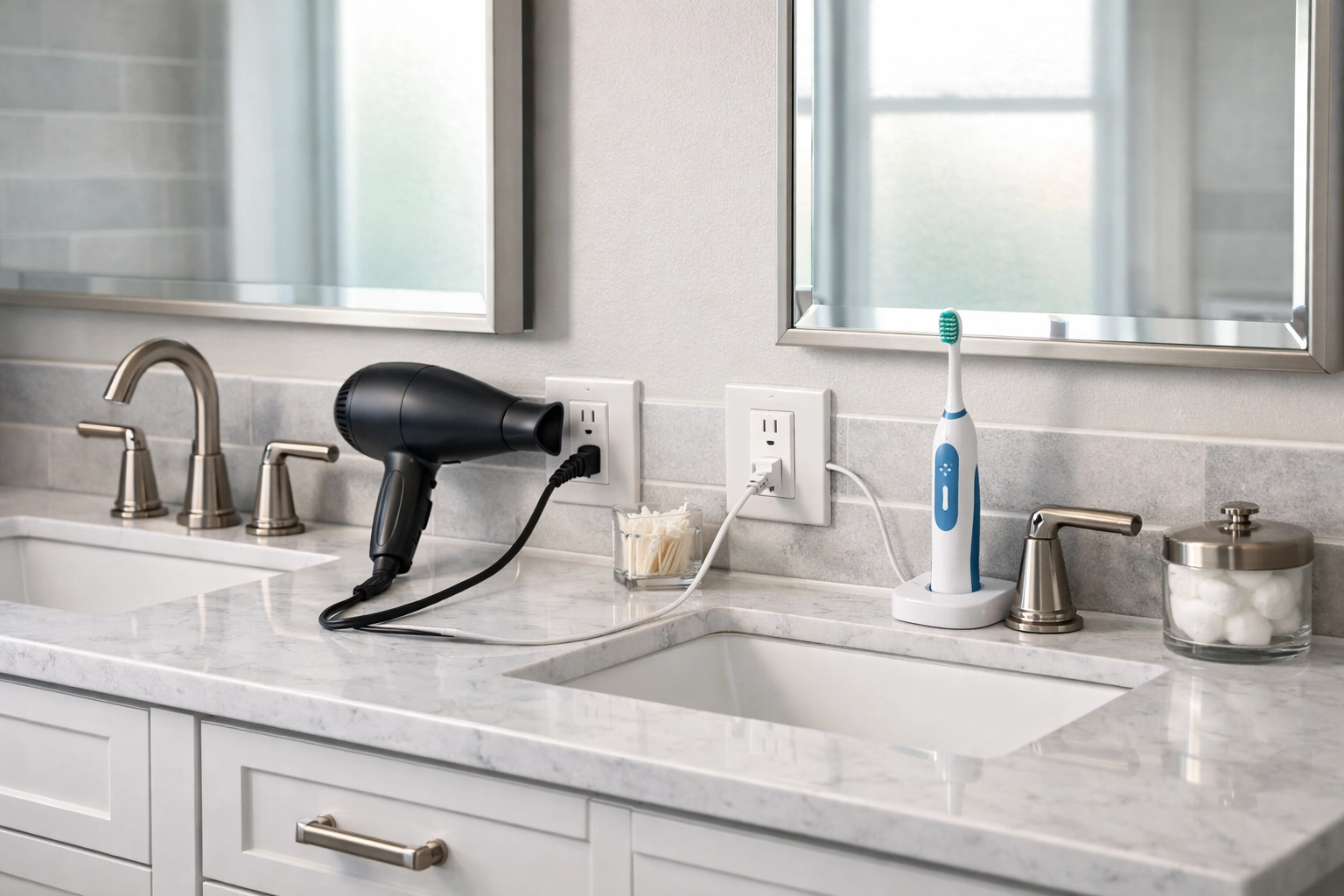
All bathroom outlets must feature GFCI protection due to water proximity. Outlets near vanities serve hair dryers, electric razors, electric toothbrushes, and other grooming appliances. However, outlets should never be installed directly above sinks where water splashing creates hazards.
Double vanities require outlets accessible from both sink locations. Larger bathrooms benefit from outlets near makeup vanities, dressing areas, or built-in storage. Some homeowners install outlets inside bathroom cabinets for electric toothbrush charging stations that remain out of sight.
Heated towel racks, bidet toilet seats, and other luxury bathroom features require dedicated outlets on appropriate circuits. These outlets must be planned during construction to ensure proper circuit capacity and code compliance.
Home Office and Workspace Requirements
The rise of remote work has made dedicated home office spaces essential in new construction. Home offices require substantially more outlets than bedrooms, typically six to eight receptacles minimum. Computer workstations demand outlets for monitors, computers, printers, desk lamps, phone chargers, and peripheral devices.
Multiple circuits prevent overload when several devices operate simultaneously. Outlets positioned at desk height on walls adjacent to workspace eliminate cords trailing across floors. Some offices incorporate floor outlets beneath desks for clean cable management.
Video conferencing requires outlets for lighting equipment, cameras, and monitors. Standing desks with electric motors need accessible outlets that accommodate cable movement as desks adjust height. Dedicated circuits for high-power equipment such as 3D printers or servers prevent interference with other home systems.
Garage and Electric Vehicle Charging
Garages require outlets for power tools, vehicle maintenance equipment, and storage organization systems. The code-required single outlet rarely suffices for modern garage use. Multiple outlets along workbench areas support various tools and equipment simultaneously.
Electric vehicle charging represents a critical planning consideration. Level 2 EV chargers require 240-volt outlets installed by licensed electricians. The electrical panel must have sufficient capacity to support EV charging without compromising other home systems. Future-proofing includes installing conduit pathways even if immediate EV ownership is not planned.
Garage storage systems, security equipment, and seasonal decoration storage all benefit from accessible outlets. Outdoor-rated outlets near garage doors accommodate pressure washers, lawn equipment charging, and exterior lighting.
Outdoor Living Spaces
Outdoor kitchens, entertainment areas, and living spaces require weatherproof outlets with in-use covers. These GFCI-protected receptacles must be positioned to avoid direct water exposure while remaining accessible for cooking equipment, outdoor speakers, and lighting.
Patios and decks benefit from multiple outlets that support string lights, outdoor heaters, and entertainment equipment. Outlets near pools or hot tubs require specific placement and GFCI protection per code. Landscape lighting systems may need dedicated circuits separate from receptacle circuits.
Front porches need outlets for seasonal decorations, security cameras, and package delivery lockers. Side yards where lawn equipment is stored require outlets for battery charging and power tool use. The perimeter of the home benefits from outlets every 20-30 feet for maintenance access.
Planning for Future Technology Integration
Smart home systems require consistent power for sensors, hubs, cameras, and control panels. Outlets positioned centrally in the home provide optimal connectivity for whole-home systems. Some homeowners install outlets in attics or utility spaces specifically for networking equipment and smart home infrastructure.
Emerging technologies such as home battery backup systems, whole-home generators, or solar panel integration require electrical planning during construction. These systems need dedicated circuits, transfer switches, and panel capacity that is difficult to retrofit after construction completion.
USB-integrated outlets reduce adapter clutter but become obsolete as USB standards evolve. Combination outlets with standard plugs and USB ports offer flexibility. However, standard outlets with removable adapters provide the most long-term adaptability.
Working with Professional Electrical Designers
Licensed electrical engineers and designers provide expertise that prevents costly mistakes during construction. Professional planning identifies optimal circuit breaker configurations, load calculations, and panel sizing that accommodate both current and anticipated future needs.
FutureGen Consulting Inc. specializes in residential electrical design that balances code compliance with practical functionality. Professional design services include load calculations for the entire home electrical system, ensuring the electrical panel capacity supports all planned circuits without future service upgrades.
Early collaboration between homeowners, architects, and electrical professionals prevents conflicts between architectural design and electrical requirements. This coordination ensures outlets are positioned optimally without compromising aesthetic goals or structural elements.
Common Planning Mistakes to Avoid
Underestimating outlet quantity remains the most frequent planning error. Homeowners who rely on code minimums invariably resort to power strips and extension cords, creating both safety hazards and aesthetic problems. Installing additional outlets during construction costs a fraction of retrofit expenses.
Placing outlets where furniture will block them wastes resources and creates functional problems. Floor plans should guide outlet placement, accounting for standard furniture arrangements even if specific pieces have not been selected. Outlets behind large appliances or in inaccessible corners serve no practical purpose.
Failing to plan for adequate circuit capacity leads to tripped breakers and potential fire hazards. Modern homes with numerous electronics require more circuits than older electrical codes anticipated. Professional load calculations prevent these problems before construction begins.
Ignoring specialized outlets for appliances such as refrigerators, washing machines, and high-power electronics creates code violations and safety issues. These appliances require dedicated circuits that cannot share load with general-purpose outlets.
Conclusion
Strategic electrical outlet planning during new home construction establishes infrastructure that serves households effectively for decades. The combination of code compliance, room-specific functionality, and future technology accommodation creates electrical systems that adapt to evolving needs without expensive retrofits.
Investment in professional electrical design services pays significant returns through optimized outlet placement, appropriate circuit configuration, and adequate electrical panel capacity. The relatively minor incremental cost of additional outlets during construction prevents substantial expenses and inconvenience when needs inevitably expand beyond minimum code requirements.
Homeowners who dedicate attention to outlet planning during the design phase enjoy homes that seamlessly support modern technology, provide power access where needed, and accommodate future innovations. The key lies in viewing electrical infrastructure not as a construction requirement to minimize, but as a foundational system that enables the home to function effectively throughout its lifetime. For comprehensive residential electrical design services, FutureGen Consulting Inc. offers expertise that transforms code compliance into optimized functionality.