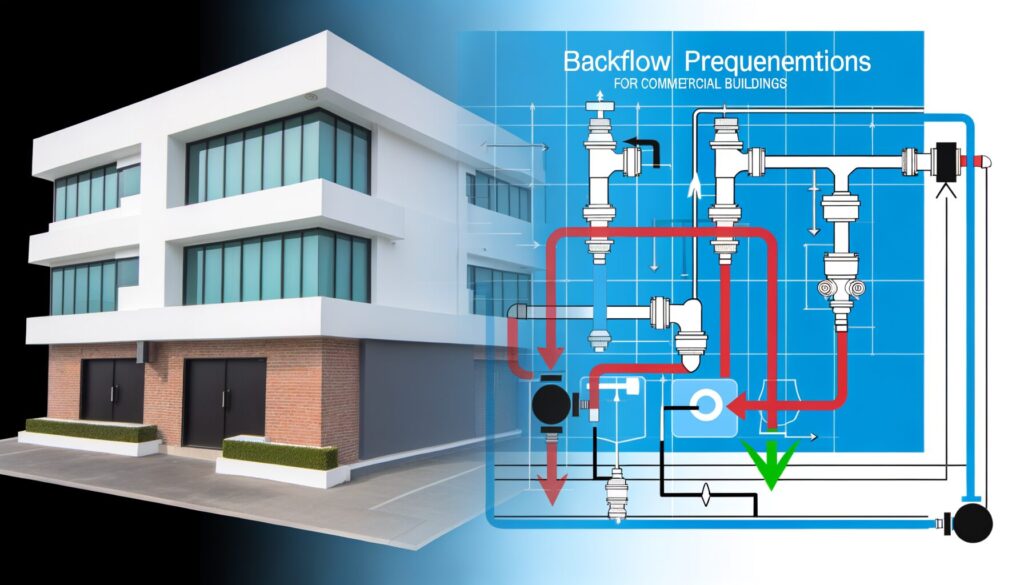
Backflow Prevention Requirements for Commercial Buildings
In commercial and institutional buildings, plumbing systems must protect the municipal drinking water supply from contamination. Backflow occurs when water flows in the reverse direction—allowing non-potable water, chemicals, or other contaminants to enter the potable system. In Ontario, backflow prevention is managed through a combination of municipal by-laws, the Ontario Building Code (OBC), and referenced standards. For property owners, developers, architects, and contractors, understanding where protection is required—and how it is typically implemented—helps reduce approval delays, avoid costly retrofits, and support compliant building operation.
Regulatory context in Ontario
Backflow prevention requirements are shaped by several layers of authority. The OBC sets minimum health and safety requirements for plumbing system design and installation, and municipalities typically administer cross-connection control programs to protect their distribution networks. In practice, project teams should expect coordination with the local water authority for service connection requirements, testing and reporting, and any additional device-specific expectations.
While requirements vary by jurisdiction, Ontario municipalities commonly require:
- Appropriate backflow prevention at or near the water service entrance (where the building connects to the municipal supply), particularly for higher-risk occupancies.
- Internal point-of-use or zone isolation backflow protection for specific hazards within the building.
- Installation and verification by qualified personnel, with periodic testing and documentation for testable assemblies.
Where backflow risks arise in commercial buildings
Cross-connections can be obvious (a direct connection between potable piping and process equipment) or subtle (a hose connection near chemicals or non-potable sources). Backpressure and backsiphonage are the two primary mechanisms:
- Backpressure occurs when downstream pressure exceeds supply pressure—common with booster pumps, elevated piping, or interconnected systems.
- Backsiphonage occurs when supply pressure drops, creating a suction effect—possible during watermain breaks, firefighting demands, or shutdowns.
Typical high-risk areas include mechanical rooms, laboratories, commercial kitchens, janitorial closets, processing areas, and any space with chemical feed systems. Even common amenities—such as irrigation and car wash connections—can introduce backflow risk if not protected properly.
Common backflow prevention approaches
Backflow protection is generally applied using a combination of containment (protecting the service connection to the building) and isolation (protecting specific equipment or hazard zones). Selecting the right device depends on the degree of hazard and the operational conditions.
Typical device types used in commercial work
- Air gap: A physical separation between the potable outlet and the flood level rim. Considered the most reliable method where feasible, particularly for severe hazards.
- Atmospheric vacuum breaker (AVB): Protects against backsiphonage (not backpressure). Often used for simple applications under controlled conditions.
- Pressure vacuum breaker (PVB): Provides backsiphonage protection and is testable. Common for irrigation systems where permitted by the local authority.
- Double check valve assembly (DCVA): Testable, used for low to medium hazards where contamination would be objectionable but not a severe health risk.
- Reduced pressure principle assembly (RP / RPZ): Testable and intended for high-hazard connections where there is a potential health risk.
Many municipalities direct designers toward tested devices and assemblies that match the hazard classification. In commercial buildings, it is common to see a testable assembly at the service entrance (containment) combined with additional protection at equipment connections (isolation) where the hazard is localized or particularly severe.
Applications that frequently trigger requirements
Backflow protection requirements are often identified during design review, building permit, or water service application. The following building systems commonly require dedicated backflow measures:
Fire protection systems
Fire sprinkler and standpipe systems often require backflow protection due to potential chemical additives, stagnant water, and system interconnections. The required device depends on system type (e.g., wet vs. dry), presence of antifreeze or other agents, and local utility expectations. Early coordination is important because fire service piping configurations, device clearances, and pressure loss can affect overall system performance.
Boiler, hydronic, and glycol systems
Hydronic heating/cooling systems and make-up water connections often represent a higher hazard, particularly where chemicals, corrosion inhibitors, or glycol are used. These systems typically require appropriately rated protection on the make-up line and careful attention to fill assembly configuration.
Commercial kitchens and food service
Dishwashers, combi ovens, carbonators, and certain specialty equipment can introduce backflow risks. Indirect connections, air gaps, and appropriate isolation devices are frequently required, especially where equipment drains, chemical dispensing, or hose connections are present.
Laboratories and process equipment
Laboratory fixtures, equipment cooling water, aspirators, and chemical mixing systems can present severe hazards. These areas often require a combination of air gaps, RP assemblies, and a defined cross-connection control plan.
Irrigation and exterior hose connections
Irrigation systems can be high risk due to fertilizers, pesticides, and exposure to non-potable sources. Hose bibbs in janitorial and loading areas are also common cross-connection points. Vacuum breakers, PVBs, or other assemblies may be required depending on use and local program requirements.
Design and coordination considerations
Backflow protection is not only a device selection exercise—it affects layout, servicing, access, and sometimes building operations. Common design considerations include:
- Access and clearances: Testable assemblies require space for inspection, testing, and maintenance. Installations in tight shafts or above ceilings can create long-term compliance issues.
- Drainage: RP assemblies discharge water during normal operation and relief events; floor drains and adequate drainage capacity are often required in mechanical rooms.
- Pressure loss: Backflow devices introduce headloss that must be accounted for in domestic water sizing and any booster pump design.
- Freeze protection: Exterior or unconditioned installations (including irrigation backflow) must consider seasonal exposure.
- Commissioning and turnover: Testing documentation, device schedules, and as-built records support occupancy and future re-testing requirements.
For larger developments, it is good practice to document a clear basis of design: hazard classifications per system, device types and locations, and any municipal utility requirements. This supports permit review and helps contractors coordinate installation details early.
Testing, documentation, and ongoing compliance
Many backflow assemblies used in commercial buildings are testable and must be tested upon installation and at intervals set by the local authority. Building owners are typically responsible for maintaining devices, ensuring qualified testing, and submitting records as required. Establishing a consistent record-keeping process—device identifiers, locations, test reports, and service history—reduces risk and simplifies renewals or inspections.
For project delivery teams, a structured turnover package can help owners meet ongoing obligations and avoid enforcement issues. For existing buildings, a targeted cross-connection assessment can identify unprotected hazards, legacy conditions, or changes in occupancy that warrant upgrades.
Conclusion
Backflow prevention in commercial buildings is a core component of safe plumbing design and municipal water protection across Ontario. By addressing hazard locations early, coordinating with local authorities, and integrating testing and access requirements into the design, project teams can support smoother approvals and reliable long-term operation. When questions arise about device selection, containment strategies, or cross-connection control documentation, engineering consulting services in Ontario can assist with practical, code-aligned approaches for both new construction and existing facilities.