
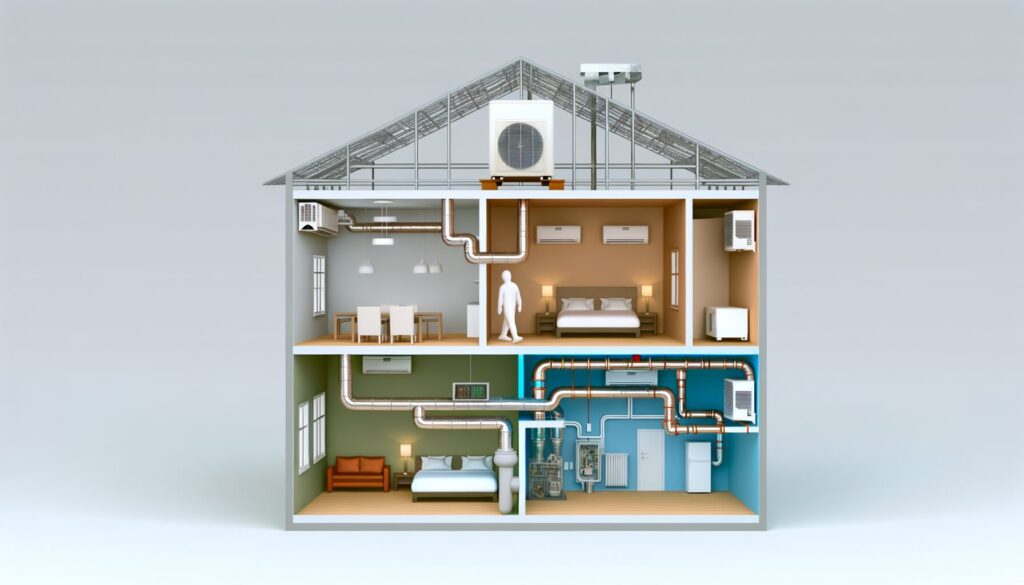
HVAC Load Calculation for Residential Spaces
Choosing heating and cooling equipment for a home is not simply a matter of square footage or matching what was installed previously. In Ontario’s climate—where winter design temperatures can be severe and summer humidity can be significant—residential HVAC performance depends on a disciplined load calculation that considers the building envelope, occupancy, internal gains, ventilation, and local design conditions. A proper load calculation allows project teams to select equipment capacities that align with comfort, energy efficiency, and code expectations while reducing operational issues such as short cycling, uneven temperatures, and excessive noise.
What a Residential HVAC Load Calculation Determines
An HVAC load calculation estimates the amount of heat a residence gains in summer (cooling load) and loses in winter (heating load). The result is typically provided as sensible and latent cooling loads and a heating load at established outdoor design temperatures. For many projects, the analysis also informs system zoning strategy, duct sizing assumptions, ventilation requirements, and the selection of heat pumps, furnaces, fan coils, ERVs/HRVs, and hydronic components.
While rule-of-thumb sizing may appear convenient, it can lead to oversized equipment that operates inefficiently, struggles with humidity control, and causes comfort complaints. Conversely, undersizing can result in insufficient capacity during peak conditions, leading to elevated energy use and inadequate indoor temperatures.
Key Inputs That Drive Accurate Results
A credible load calculation relies on quality project information and coordinated assumptions among the owner, designer, and contractor. The following inputs typically have the greatest influence on residential results:
-
Ontario climate design data: Outdoor design temperatures and humidity levels are selected based on the project location (e.g., Southern Ontario vs. colder inland regions).
-
Building envelope performance: Effective insulation values, wall/roof assemblies, slab or basement conditions, and air sealing levels significantly affect heating demand.
-
Fenestration details: Window U-values, Solar Heat Gain Coefficients (SHGC), glazing area, frame type, shading, and orientation impact both winter heat losses and summer solar gains.
-
Infiltration and air leakage: Natural infiltration assumptions or measured airtightness (when available) can change loads materially, particularly for high-performance homes.
-
Ventilation requirements: Outdoor air rates associated with mechanical ventilation (HRV/ERV) introduce sensible and latent loads that must be accounted for.
-
Internal gains: Occupant density, lighting power, and appliance loads contribute to cooling demand and can offset heating demand.
-
Thermostat setpoints and schedules: Heating and cooling setpoints, setbacks, and expected occupancy patterns influence peak and part-load conditions.
Cooling Load: Sensible and Latent Matter in Ontario
Cooling load is often misunderstood because it is not solely about temperature. In Ontario, latent load (moisture removal) can be a major driver of comfort, particularly during humid summer conditions and shoulder seasons. A calculation typically separates:
-
Sensible load: Heat that raises indoor air temperature, driven by solar gains, conduction through the envelope, and internal heat sources.
-
Latent load: Moisture that must be removed to control indoor humidity, influenced by outdoor air, infiltration, occupants, and activities such as cooking and showering.
Oversized cooling equipment may satisfy sensible demand quickly, then shut off before removing adequate moisture, leading to elevated indoor relative humidity and comfort complaints. Proper equipment selection and control strategy—especially for high-performance envelopes—should be informed by how the calculated sensible heat ratio aligns with available equipment performance at expected operating conditions.
Heating Load: Beyond Peak Capacity
Heating load calculations in Ontario frequently guide selection between gas-fired furnaces, air-source heat pumps (ASHP), cold-climate heat pumps, and hybrid/dual-fuel approaches. While peak heating capacity is important, design teams should also consider:
-
Low-temperature performance: Heat pump output and efficiency vary with outdoor temperature; capacity at winter design conditions should be verified.
-
Distribution limitations: Ducted systems, hydronic emitters, and airflows must support the required heat delivery to each zone without excessive noise or pressure drop.
-
Basements and below-grade spaces: Foundation walls, slabs, and rim joists can dominate losses if not properly detailed and insulated.
For residential projects with tighter envelopes, heating loads may be lower than expected, making equipment turndown and control stability more critical than raw capacity. Right-sizing helps maintain longer run times at lower outputs, improving comfort and efficiency.
Room-by-Room Loads and Zoning Strategy
Total house load is only part of the design story. Room-by-room calculations identify spaces with elevated losses or gains—such as large glazing areas, north-facing bedrooms, or top-floor rooms with significant roof exposure. These results support:
-
Duct and diffuser selection: Supply airflow requirements and throw patterns can be aligned to room loads and layout.
-
Hydronic emitter sizing: Radiant panels, baseboards, or fan coils can be selected based on room heating demand and water temperatures.
-
Zoning decisions: Separating floors or exposures can reduce temperature swings and improve occupant control.
Room-level results are particularly valuable for custom homes, multi-unit residential projects, and major renovations where architectural features and envelope upgrades change the thermal profile of the building.
Common Issues That Lead to Inaccurate Sizing
Load calculations are only as reliable as the assumptions behind them. Several recurring issues can skew results and lead to field problems:
-
Generic window assumptions: Using default glazing properties instead of manufacturer data can understate solar gains or overstate heat losses.
-
Uncoordinated envelope details: If insulation levels or air barrier continuity change during design development, loads should be updated.
-
Ignoring ventilation impacts: Outdoor air and exhaust-driven makeup air can introduce meaningful heating and cooling demand.
-
Oversimplified infiltration rates: Older housing stock and renovation projects often experience higher leakage than assumed.
-
Not accounting for equipment performance at conditions: Nominal ratings do not always reflect capacity at Ontario design temperatures or at specific airflow and coil conditions.
How Load Calculations Support Project Delivery
For property owners, developers, architects, and contractors, a well-documented load calculation provides a defensible basis for equipment selection and helps align expectations across disciplines. It can reduce change orders, mitigate comfort complaints, and support smoother approvals by demonstrating that HVAC design decisions are grounded in project-specific conditions. In renovations, it also clarifies whether envelope improvements justify downsizing equipment, revising distribution, or shifting to different system types.
Conclusion
Residential HVAC load calculation is a fundamental engineering step that supports comfort, energy performance, and reliable system operation under Ontario’s seasonal extremes. When coordinated with architectural and envelope design, it provides clear direction for equipment selection, zoning, and distribution strategies. For projects where decisions must be documented and aligned across stakeholders, engineering consulting services in Ontario can assist with appropriate calculations and design coordination based on the specific building and site conditions.