
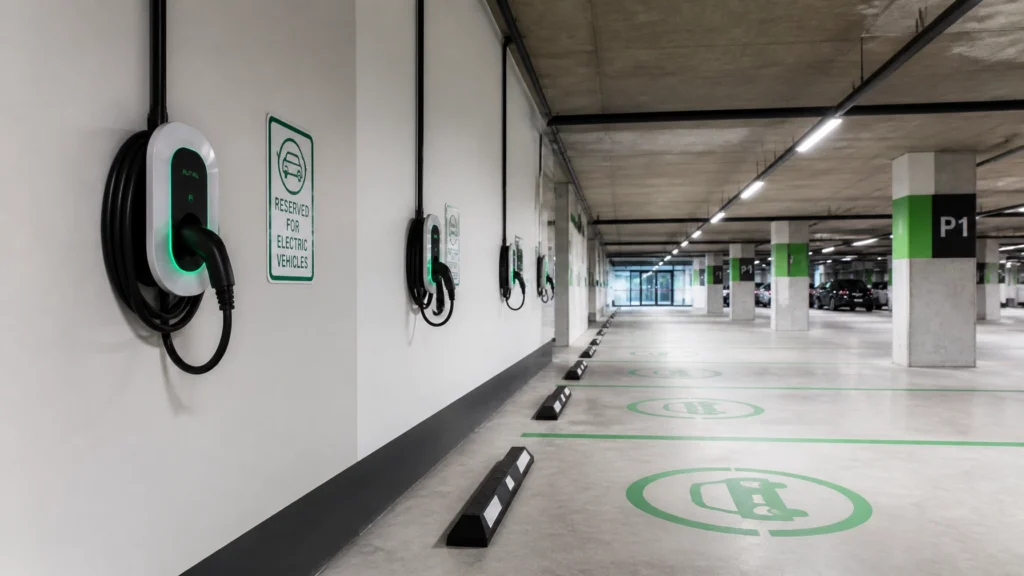
Introduction
The transition toward electric mobility in Ontario is no longer a peripheral consideration for property developers and facility managers. As provincial and federal mandates accelerate the adoption of zero-emission vehicles, the integration of Electric Vehicle Supply Equipment (EVSE) into the built environment has become a critical engineering requirement. This guide provides a comprehensive overview of the technical, regulatory, and practical considerations necessary for successful EV charger infrastructure design in Ontario. By aligning with the latest electrical codes and building standards, stakeholders can ensure that their residential and commercial projects are both compliant and future-ready.
The Regulatory Framework in Ontario
Designing EV infrastructure in Ontario requires strict adherence to a multi-layered regulatory environment. The primary governing bodies include the Electrical Safety Authority (ESA), which enforces the Ontario Electrical Safety Code (OESC), and the Ministry of Municipal Affairs and Housing, which oversees the Ontario Building Code (OBC). Recent updates, including the 2024 edition of the OESC, have introduced specific provisions for EV charging systems to address increasing load demands and safety requirements. Engineers must also navigate the Ontario Energy Board’s (OEB) new Electric Vehicle Charging Connection Procedures (EVCCP), which standardize how utilities manage connections for public and shared charging infrastructure.
Ontario Electrical Safety Code (OESC) Compliance
Section 86 of the Ontario Electrical Safety Code specifically governs the installation of electric vehicle charging systems. This section outlines requirements for branch circuits, overcurrent protection, and the physical placement of charging units. For commercial and multi-residential projects, an ESA permit is mandatory and must be filed by a Licensed Electrical Contractor (LEC) before work begins. The 2024 OESC updates have further refined demand load calculations, particularly for installations involving multiple chargers. These changes aim to prevent the overloading of existing electrical services while providing clear guidelines for the labeling and capacity of new systems.
Ontario Building Code (OBC) and EV Readiness
The Ontario Building Code establishes the minimum requirements for EV readiness in new constructions and major renovations. For non-residential and mixed-use buildings, the code requires that a specific percentage of parking spaces: often up to 20%: be equipped with energized EVSE. The remaining parking spaces must typically be designed as "EV-ready," which includes the installation of conduit, spare breaker positions, and sufficient panel capacity to support future charging expansion. These proactive measures significantly reduce the cost of future retrofits and ensure that buildings can meet the long-term demands of tenants and visitors.

Understanding Charger Levels and Infrastructure Requirements
Infrastructure design varies significantly based on the level of charging provided. Level 1 chargers utilize a standard 120V AC outlet and are generally insufficient for commercial or multi-residential shared use. Level 2 chargers, operating at 208V or 240V AC, are the industry standard for workplaces, retail locations, and residential buildings, offering a balance between installation cost and charging speed. Level 3 chargers, also known as DC Fast Chargers, require high-voltage 480V or 600V three-phase power and are typically reserved for highway service centers or fleet depots where rapid charging is essential. Selecting the appropriate level is a foundational step in the MEP (mechanical, electrical, plumbing) engineering process.
Electrical Load Calculations and Capacity Planning
One of the most complex aspects of EV infrastructure design is the impact on a building’s total electrical load. Engineers must perform detailed load calculations to determine if the existing electrical service can support the additional demand of EV chargers. In many cases, adding multiple Level 2 chargers can exceed the capacity of an older building's main transformer or distribution switchgear. These calculations must account for diversity factors and peak demand periods to ensure the reliability of the entire electrical system. FutureGen Consulting Inc. specializes in electrical construction cost estimation and power distribution design to help clients navigate these technical challenges.
Electric Vehicle Energy Management Systems (EVEMS)
To mitigate the need for costly service upgrades, many modern designs incorporate Electric Vehicle Energy Management Systems (EVEMS). These "smart" systems monitor the total building load and dynamically adjust the power delivered to each EV charger based on available capacity. By implementing load shedding or load sharing strategies, property owners can install more chargers than the physical electrical service would traditionally allow. The OESC recognizes EVEMS as a valid method for managing demand, provided the systems meet specific safety and performance standards. This technology is particularly beneficial for multi-residential buildings where electrical capacity is often limited.

Utility Interconnection and the OEB EVCCP
The process of connecting EV infrastructure to the local utility grid is now governed by the OEB’s Electric Vehicle Charging Connection Procedures (EVCCP). This standardized seven-step process includes preliminary consultation, connection requests, and utility reviews. For larger projects, the utility may require an economic evaluation to determine if the cost of system expansion should be shared or borne by the developer. Early engagement with local distribution companies (LDCs) is essential to avoid project delays and to understand the specific connection requirements of different regions across Ontario.
Design Considerations for Multi-Residential Sites
In multi-residential buildings, such as condominiums and apartments, EV infrastructure design must address both technical and administrative challenges. Common-area charging stations require clear signage, accessible parking stalls, and robust billing systems to track energy usage. Conversely, assigned-stall charging may require complex sub-metering or the use of flat-rate fees. Engineers must also consider the physical routing of conduits through parking garages, ensuring that installations do not interfere with fire suppression systems or structural elements. Construction review and site-specific planning are vital to maintaining the integrity of these complex environments.

Commercial and Fleet Implementation Strategies
Commercial properties, such as retail centers and office buildings, often prioritize the user experience and brand visibility when designing EV infrastructure. This includes the selection of aesthetically pleasing charging hardware and the integration of mobile apps for payment and availability tracking. For commercial fleets, the focus shifts toward maximum uptime and high-capacity charging to ensure vehicles are ready for daily operations. In these scenarios, temporary power design may be required during the construction phase to support ongoing operations while the permanent infrastructure is being commissioned.
Incentive Programs and Financial Considerations
The financial viability of EV infrastructure projects in Ontario can be enhanced through various federal and provincial incentive programs. The Zero-Emission Vehicle Infrastructure Program (ZEVIP), administered by Natural Resources Canada (NRCan), offers grants that can cover a significant portion of the capital costs for charging stations. Additionally, some municipalities in Ontario offer localized rebates or expedited permitting for EV-ready buildings. Incorporating these incentives into the initial project planning phase can provide a more favorable return on investment and accelerate the deployment of charging technology.
Conclusion
The design and implementation of EV charger infrastructure in Ontario require a sophisticated understanding of electrical engineering principles, provincial building codes, and emerging energy management technologies. By prioritizing EV readiness in the early stages of project development, stakeholders can avoid the high costs associated with future retrofits and ensure compliance with the evolving regulatory landscape. Successful projects are characterized by meticulous load calculations, strategic equipment selection, and early coordination with local utilities. As Ontario continues its path toward widespread electrification, professional MEP engineering expertise remains the cornerstone of reliable and scalable EV infrastructure. Developers and property owners are encouraged to engage with experienced consultants to navigate these complexities and deliver high-performance charging solutions.