
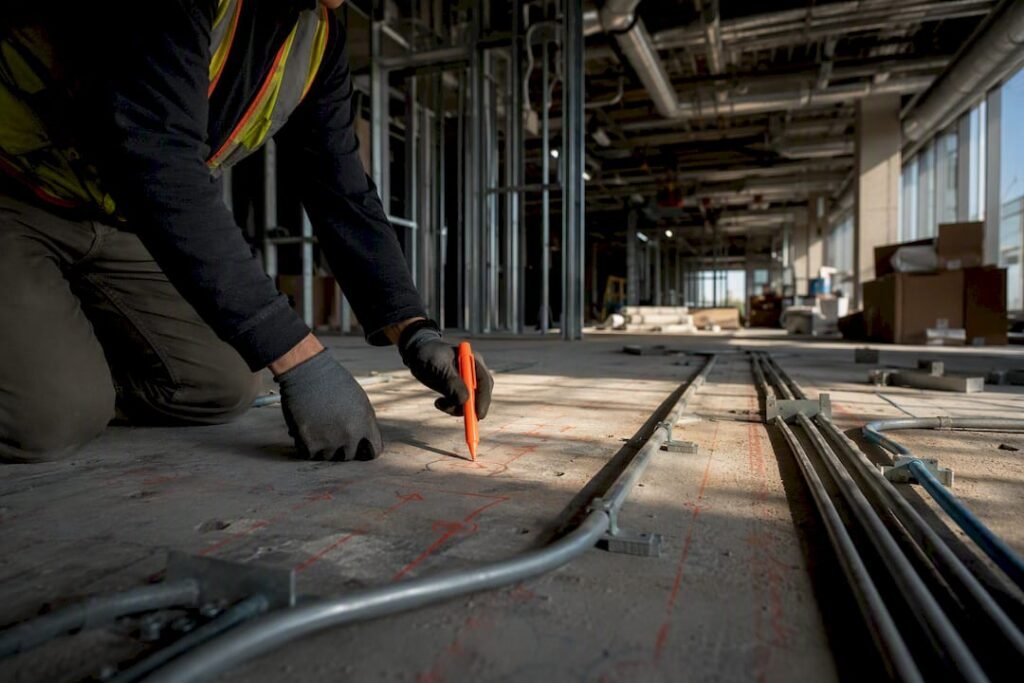
Four interventions determine whether a fast-track MEP design schedule holds or collapses: engaging mechanical, electrical, and plumbing engineers before the architectural drawings are frozen, enforcing a BIM Execution Plan with a fixed clash-detection cadence, releasing design packages in phases instead of all at once, and running a change-control process fast enough to keep pace with construction. CII research tracking 31 fast-track projects found statistically significant links between design schedule performance and exactly these four practices: pre-project planning, alignment, constructability, and change management.
Do two things this week. First, schedule a preconstruction MEP coordination meeting before structural steel is ordered, not after. Second, write a BEP clause into the project charter that names who owns clash resolution and how often the coordination model gets reviewed. Everything else in this playbook builds on those two moves.
Key Takeaways
Fast-track MEP design succeeds when early engineering involvement, a disciplined BEP, phased design packaging, and fast change control all operate together, not in isolation.
| Point | Details |
|---|---|
| Engage MEP early | Bring mechanical, electrical, and plumbing engineers in before structural packages freeze to protect riser and shaft flexibility. |
| Enforce a BEP | Fix model submission dates, clash-report cadence, and QA sign-off criteria before any model reaches IFC status. |
| Sequence rough-in deliberately | Route gravity piping first, then ductwork, then pressure piping, then electrical, to minimize field conflicts. |
| Stage commissioning early | Run commissioning tasks in parallel with rough-in instead of compressing them into the final weeks. |
| Partner for compliance | Futuregenconsulting delivers BEP creation, MEP coordination, and engineer-stamped drawings that meet Canadian code requirements on fast-track timelines. |
Table of Contents
- What Is Fast Track MEP Design and Why Does Sequencing Matter?
- Which Best Practices Protect Schedule and Quality on Fast-Track Jobs?
- How Do You Run MEP Coordination With BIM and Overlays?
- How Should Design Packages Be Sequenced for Construction?
- What Usually Goes Wrong on Fast-Track MEP Projects?
- What Should a Fast-Track MEP Checklist Include?
- Why Most Fast-Track Delays Trace Back to One Decision
- Get Fast-Track MEP Design Support Built for Ontario Code Compliance
- Sources
What Is Fast Track MEP Design and Why Does Sequencing Matter?
Fast-track MEP design means mechanical, electrical, and plumbing engineering proceeds concurrently with early construction phases rather than waiting for a fully completed design set. Fast-track projects commonly compress overall delivery to 16 to 24 months by issuing early construction packages while later design phases are still being developed. That overlap is where schedule gains come from, and it’s also where the risk lives: a structural package poured before MEP routing is locked can force redesign of risers, penetrations, and shaft locations after concrete has already gone in.
Which Best Practices Protect Schedule and Quality on Fast-Track Jobs?
The CII framework breaks down into four disciplines that project teams can apply immediately, without waiting for a new software rollout or an organizational restructuring.
- Pre-project planning. Before design starts, define the design packaging strategy: which systems get issued first, which long-lead equipment (switchgear, chillers, generators) needs procurement decisions locked in months ahead of installation, and what decision windows exist before each package freezes.
- Alignment. Run a stakeholder alignment workshop with the owner, architect, general contractor, and MEP consultant in the room together, not in separate calls. Document who signs off on load assumptions, ceiling heights, and shaft sizing, because those assumptions ripple through every downstream package.
- Constructability. Schedule constructability reviews at each major design milestone and map site interfaces early, particularly where structural, mechanical, and electrical routing compete for the same ceiling cavity.
- Change management. Set up an RFI and decision workflow with response-time targets, and name the specific roles (lead mechanical engineer, electrical P.Eng., GC superintendent) who must be reachable for same-day approvals during peak coordination periods.
Procurement discipline ties all four together. Ordering switchgear or rooftop units before the design is 100% complete only works when the alignment workshop has already locked the electrical service size and mechanical capacity assumptions those orders depend on.
Pro Tip: Build your long-lead procurement list at the same meeting where you set the design packaging strategy. Treat equipment lead time as a design constraint, not a downstream procurement problem.
How Do You Run MEP Coordination With BIM and Overlays?
Coordination has to start in preconstruction, not after the models mature. Practitioner workflow guidance recommends overlaying drawings early, flagging tight zones before they become field conflicts, holding a dedicated preconstruction MEP meeting, and setting routing priorities so trades aren’t fighting over the same ceiling space mid-installation.
A functioning BEP needs four elements defined before anyone models a single duct run:
- Model ownership: which discipline controls which Revit or file components, and how conflicts over shared elements get resolved.
- Submission timeline: fixed dates for model uploads, tied to the overall design package schedule.
- Clash-report cadence: weekly during design development, increasing to twice weekly during rough-in.
- QA/QC sign-off: a checklist every model must pass before it’s issued for construction.
A structured BEP can cut coordination time by up to 30% by enforcing exactly these submission schedules and clash cadences rather than leaving coordination timing to informal negotiation between trades.
Clash detection triage matters more than clash detection frequency. Not every clash is critical; a duct crossing a cable tray by two inches in an unoccupied mechanical room is not the same priority as a sprinkler main conflicting with a structural beam in a public corridor.
| Clash severity | Example | Resolution owner |
|---|---|---|
| Critical | Structural conflict in occupied space | Lead MEP engineer, same day |
| Moderate | Cross-trade routing overlap | Discipline coordinator, fast response |
| Tolerance | Minor clearance issue, unoccupied space | Field resolution during rough-in |
Full BIM isn’t always cost-justified. On smaller renovation or tenant fit-out jobs, PDF overlays and ceiling coordination sheets do the same job at a fraction of the setup cost. When models are coordinated to fabrication-level detail, MEP prefabrication becomes viable, cutting site labor and rework because racks, skids, and headers arrive pre-assembled rather than being built duct-by-duct in the field.
How Should Design Packages Be Sequenced for Construction?
Phased packaging keeps steel and concrete moving while later MEP design catches up, but only if each package is genuinely construction-ready when it’s issued.
- Structure and shell packages first, but only after the least-flexible MEP interfaces (riser locations, major shaft penetrations) are locked and documented, since those decisions are the hardest to reverse once concrete is poured.
- Rough-in packages follow a fixed hierarchy: sanitary and gravity-fed piping routes first, then ductwork, then pressure piping, then electrical and low-voltage last, since electrical routing is the most adaptable around existing obstructions.
- Run a two- to three-week look-ahead at every coordination meeting so upcoming rough-in conflicts surface before crews are on-site, not after.
- Treat partial IFC releases carefully. Issuing a floor’s electrical package before mechanical is finalized is sometimes necessary on compressed schedules, but it requires clear documentation of open assumptions so the next package doesn’t get built on outdated information.
What Usually Goes Wrong on Fast-Track MEP Projects?
Spatial conflicts top the list. Establish a routing hierarchy before rough-in starts and designate mockup zones in the most congested ceiling areas so the sequence gets tested once before it’s repeated across an entire floor plate.
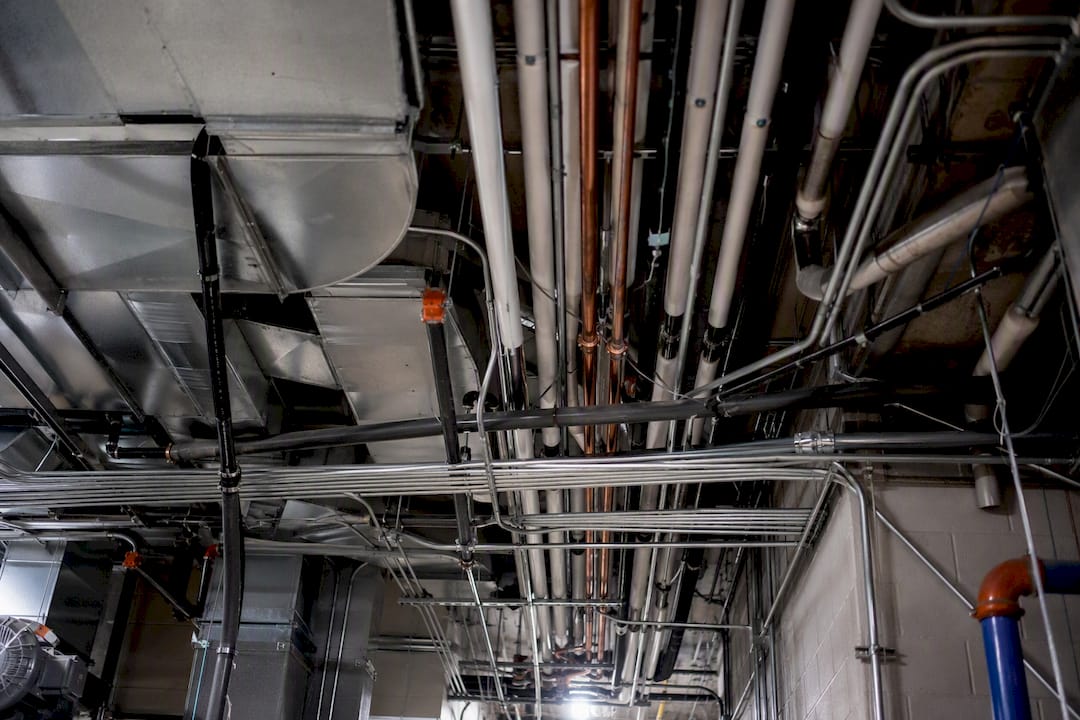
Existing conditions cause the second most common disruption, particularly on renovation work. Fast-track schedules remove the design review buffer that catches drawing errors, which makes field verification of existing conditions disproportionately important before rough-in begins rather than after a conflict is discovered.
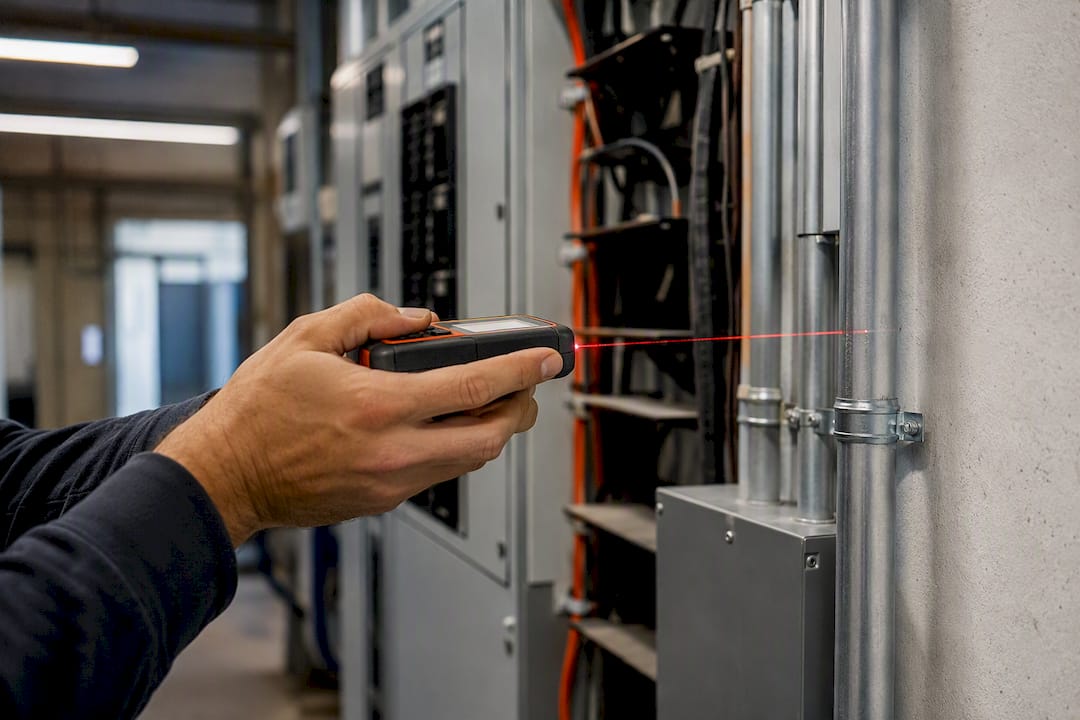
Commissioning pressure builds when testing gets pushed to the very end of a compressed schedule. Stage commissioning tasks in parallel with rough-in wherever systems allow it, rather than treating commissioning as a single event after construction wraps.
Supply chain delays on switchgear, transformers, and custom air handling units remain the most common cause of schedule slippage on fast-track jobs.
- Lock long-lead equipment orders at the pre-project planning stage, before final load calculations are complete if necessary.
- Require staged acceptance testing so equipment defects surface before it’s buried behind finished walls.
- Route every proposed substitution through the same engineer who approved the original specification, not through procurement alone.
Pro Tip: Keep a single running log of every field-verified dimension that differs from the original drawings. That log becomes the fastest way to catch a routing conflict before it reaches a second floor.
What Should a Fast-Track MEP Checklist Include?
Thirty years of running MEP design on Ontario projects points to a short list of governance items that separate projects that hold schedule from ones that don’t.
- Role matrix. Name the lead mechanical engineer, electrical P.Eng., plumbing designer, and GC coordination lead, and specify who has final say on clash resolution for each discipline.
- Meeting cadence. Preconstruction MEP kickoff before any package is issued, weekly coordination through design development, and daily short walks during peak rough-in weeks.
- Minimum BEP items. Fixed model delivery dates, a published clash-detection schedule, a consistent file-naming convention across disciplines, and a QA sign-off checklist before any model reaches IFC status.
- Documentation deliverables. Coordinated ceiling and shaft drawings, a written commissioning plan staged against the construction schedule, and a clear owner for as-built capture during construction reviews.
Every drawing produced under this checklist still needs to meet applicable Canadian building and electrical code requirements before it’s issued for construction, since a fast schedule never changes what a permit reviewer requires. Building this checklist into the project charter on day one, rather than assembling it reactively once coordination problems appear, is what makes the difference between a fast-track schedule that holds and one that quietly slips by a month at a time.
Why Most Fast-Track Delays Trace Back to One Decision
The conventional wisdom treats fast-track MEP design as a scheduling problem: compress the timeline, add more coordination meetings, push harder. That framing misses what actually derails these projects. Delays trace back overwhelmingly to one decision made too late: locking riser and shaft locations after structural packages are already released instead of before.
Every fast-track project I’ve analyzed treats coordination as a documentation exercise rather than a risk-transfer mechanism. Issuing a model for construction without a QA sign-off doesn’t eliminate the coordination problem; it just moves that problem from a conference room to a job site, where it costs ten times more to fix. The teams that actually hold schedule are the ones that accept a harder truth: some decisions have to be made with incomplete information, and the job of good MEP engineering is to make sure those early decisions are the ones with the most flexibility left downstream, not the least.
What gets underrated is procurement timing. Everyone focuses on the coordination model, but a switchgear order placed three months late will blow a schedule that perfect clash detection never could have saved.
— Sanjay
Get Fast-Track MEP Design Support Built for Ontario Code Compliance
Reading a playbook is one thing; running coordination meetings against a compressed schedule while keeping every drawing compliant with Canadian building and electrical codes is another. Futuregenconsulting has spent over 30 years delivering engineer-stamped MEP design for fast-track projects across Ontario, which means the BEP, the clash-detection cadence, and the permit-ready drawing set arrive as one coordinated package instead of three separate headaches.

Engage Futuregenconsulting and the first 30 days typically include project scoping, a draft BEP defining model ownership and clash-report cadence, and a first coordination workshop with your architectural and structural teams. Services cover BIM Execution Plan development, MEP coordination management, engineer-stamped construction documents, and field construction reviews to catch discrepancies before they become rework. If your fast-track schedule needs an MEP partner who can move at construction pace without cutting corners on code compliance, explore Futuregenconsulting’s MEP engineering services and start scoping your project this week.