
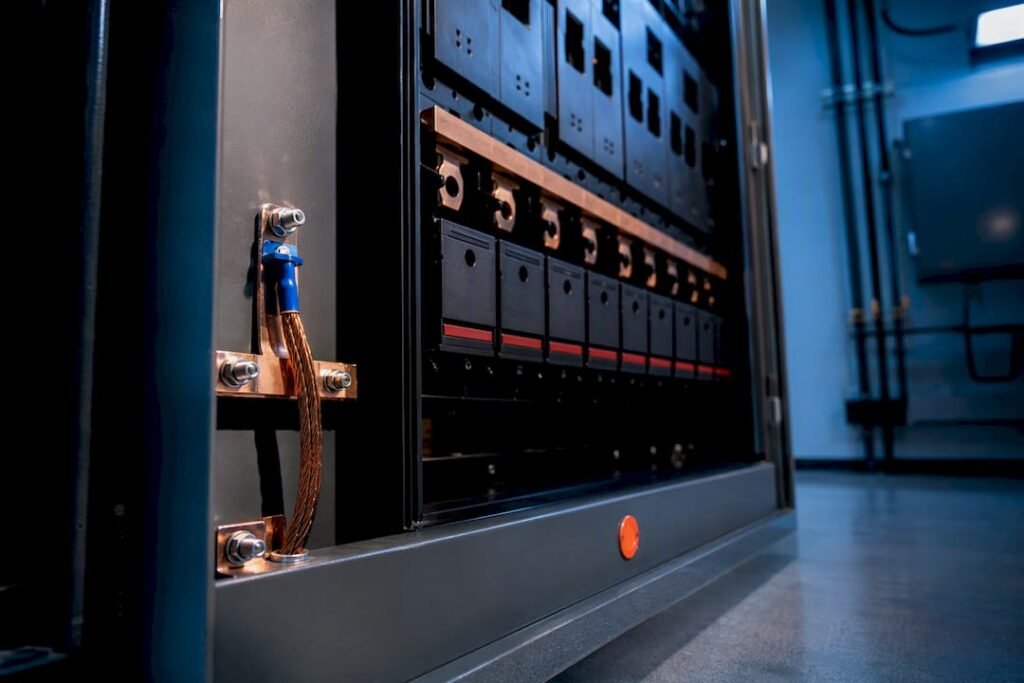
Buildings need professionally specified layered surge protection, starting with a panel-mounted SPD at the service and extending to sub-panel and point-of-use devices where sensitive loads demand it. Reference points that matter in Canada include the Electrical Safety Authority, Hydro One, and the National Building Code. If your building has never had its main service assessed for surge protection, the next step is simple: inspect the main service panel and consult a qualified electrical professional before the next storm season or equipment failure forces the issue.
TL;DR:
- External surges from lightning and utility faults are only part of the damage; internal surges from motors and switching loads gradually weaken critical building systems.
- A layered surge protection approach includes service-entrance, sub-panel, and point-of-use devices working together with proper coordination and grounding.
- Proper installation, grounding, and regular inspection are essential to ensure SPDs perform correctly and reach their full lifespan.
- Costs of retrofit vary based on the number of panels and complexity, with prioritization focusing on main service first and critical loads next.
- Building-specific design and documentation, including coordination studies, are necessary to meet code requirements and ensure effective surge protection.
Table of Contents
- What Surge Protection Is and Why Buildings Need It
- What Types of SPDs Protect a Building?
- What Canadian Codes and Standards Apply to Surge Protection?
- How Does Layered Surge Protection Work in Practice?
- What Specifications Matter When Choosing an SPD?
- How Should SPDs Be Installed for Best Performance?
- How Long Do Surge Protective Devices Last?
- How Do SPDs Coordinate With UPS and Battery Backup Systems?
- What Does a Surge Protection Retrofit Cost, and Where Should You Start?
- What Should Be on a Site Checklist Before Specifying SPDs?
- What Happens When Surge Protection Fails or Is Missing?
- How Do You Verify an SPD Installation Actually Works?
- What New Technologies Are Changing Surge Protection?
- Why Professional, Code-Aligned Surge Protection Design Reduces Risk
- How a consulting engineering firm turns this checklist into a built system
- Where to Find Official Surge Protection Guidance
- Sources
- FAQ
What Surge Protection Is and Why Buildings Need It
A power surge is a short, unexpected spike in voltage or current that exceeds what a circuit is designed to carry. Some come from outside the building, lightning strikes on distribution lines, utility switching, or grid faults. Others originate inside the walls: elevator motors starting, HVAC compressors cycling, welding equipment firing, or even a large photocopier kicking on. Hydro One’s guidance on electrical storm safety notes that surges can cause cumulative damage to sensitive electronics and overload wiring, and utilities recommend installing surge protection and checking safety equipment after storms.
The internal surges are the ones building owners underestimate. A single lightning-driven transient gets attention because the lights flicker and something visibly fails. The smaller, near-constant internal surges from motor starts and switching loads are quieter. They degrade capacitors, weaken insulation, and shorten equipment life one small event at a time, a pattern closer to metal fatigue than a single catastrophic failure.
That matters most for the systems a building genuinely cannot afford to lose:
- Building automation systems (BAS) controlling HVAC, lighting, and access control
- Fire alarm control panels and life safety notification equipment
- Server rooms, network switches, and telecom infrastructure
- Elevator control systems and emergency lighting inverters
- Point-of-sale, medical, or laboratory equipment sensitive to voltage variation
The Electrical Safety Authority specifically advises checking hard-wired safety devices, smoke alarms and CO detectors among them, after any surge event, because damage isn’t always visible on inspection. That’s the core problem with treating surge protection as optional: the failure mode is often silent until the device is needed most.
What Types of SPDs Protect a Building?
Surge protective devices fall into three functional categories, and a complete strategy for surge protection for buildings uses more than one.
- Service-entrance or panel-mounted SPDs (Type 1/Type 2). These mount at or near the main service panel and handle the largest transients, including lightning-induced surges entering from the utility side. They form the foundation of building-level protection and are increasingly specified during service upgrades because panel-fit designs simplify retrofits and give inspectors clear performance ratings to reference.
- Sub-panel or distribution SPDs. Installed at downstream distribution panels, these catch surges generated inside the building, motor switching, elevator loads, HVAC cycling, before they reach sensitive branch circuits. They also reduce the residual voltage that a single service-entrance device can’t fully absorb over longer conductor runs.
- Point-of-use devices. Plug-in strips or receptacle-mounted units protect individual pieces of equipment. They help with fine-grained protection for a workstation or a piece of lab equipment, but they have limited surge current capacity and no ability to protect wiring, motors, or equipment upstream of the outlet.
Relying on point-of-use devices alone is the most common mistake building owners make. A power strip can absorb a small transient at a desk, but it does nothing for the elevator controller, the rooftop unit, or the fire panel three floors away. Panel-mounted and sub-panel SPDs address the building as a system rather than protecting isolated devices one outlet at a time.
What Canadian Codes and Standards Apply to Surge Protection?
The National Building Code of Canada doesn’t sit in isolation. It references other standards and editions that designers must apply according to the specific code clauses governing their project, which means the applicable requirements for surge protection depend on the referenced documents in force for that jurisdiction and project type at the time of design. Provincial electrical safety authorities administer inspection and permitting on top of that framework, and their expectations often go beyond the bare code minimum, particularly for buildings undergoing service upgrades or major renovations.
Utilities add another layer of expectation through their conditions of service. Hydro One’s conditions of service state that customers are responsible for protecting their own equipment, and the utility may require corrective action or, in some cases, disconnect service if a customer’s equipment threatens distribution system safety or reliability. That obligation runs both directions: building owners are expected to protect their systems from utility-side events, and utilities expect building equipment not to introduce problems back onto the grid.
For multi-unit residential and mixed-use buildings, compliance gets more layered because life safety systems, common-area electrical, and individual suites each carry different code obligations. Owners of these buildings benefit from reviewing the electrical safety requirements specific to multi-unit structures before assuming a single SPD strategy covers the whole property.
Preparing for an inspection or utility service upgrade goes more smoothly with a documentation package ready in advance:
- SPD nameplate data and manufacturer test reports matching the installed model
- A coordination study showing how service, sub-panel, and point-of-use devices work together
- Panel schedules identifying which circuits and loads each SPD protects
- Grounding and bonding diagrams referenced to the applicable code edition
Inspectors and utility representatives move faster through a service upgrade when this paperwork already exists rather than being assembled after a question comes up.
How Does Layered Surge Protection Work in Practice?
The industry term for this approach is cascading protection, and it’s the dominant strategy for surge protection for buildings that face both external and internal surge sources. ABB’s guidance on residential surge protective devices describes cascading protection as coordinated SPDs placed at the main service and at sub-panels, working together rather than relying on one device to catch everything.
The logic is straightforward once you see it laid out. A Type 1 or Type 2 device at the service entrance absorbs the bulk of a large external transient. A sub-panel SPD downstream handles what gets through, plus any surge generated inside the building by motors or switching equipment closer to that panel. Point-of-use devices, where used, catch what’s left before it reaches a sensitive piece of equipment.
Coordination between these layers depends on a few practical factors:
- Clamping hierarchy. Upstream devices should have a higher clamping voltage than downstream devices, so each layer only handles what the previous one didn’t absorb.
- Conductor length between devices. Excessive distance between an SPD and the panel it protects increases let-through voltage; shorter runs perform better.
- Bonding quality. Practitioners specify single-point, low-impedance bonding conductors and enforce separation limits so clamping levels stay effective at the load they’re meant to protect, a detail confirmed in ABB’s residential SPD documentation.
Done correctly, cascading protection reduces the residual voltage that ultimately reaches sensitive equipment and extends the working life of everything downstream, from HVAC controllers to server power supplies.
Pro Tip: When reviewing a coordination study, check that the sub-panel SPD’s protection level (Up) is genuinely lower than the service SPD’s let-through voltage at the distance installed. A coordination study that just lists two devices without confirming the voltage relationship between them isn’t actually verifying coordination.
What Specifications Matter When Choosing an SPD?
Selecting the right device means reading a datasheet the way an electrical engineer does, not the way a retail buyer skims a product label. The IET’s technical guidance on surge protective devices lays out the transient sources and protection modes that these specifications are built to address.
The core electrical ratings to verify before specifying or approving an SPD:
- Uc (maximum continuous operating voltage) and MCOV: confirm the device is rated for the actual system voltage, including tolerance for normal fluctuation, not just the nominal voltage.
- In (nominal discharge current) and Imax: these describe how much surge current the device can repeatedly handle (In) versus its single-event maximum (Imax). A device undersized here will fail early under repeated internal switching surges.
- Up (voltage protection level): the clamping voltage the device lets through to the protected equipment. Lower is generally better, but it has to be evaluated against the coordination hierarchy, not in isolation.
- Modes of protection: confirm the device protects line-to-line, line-to-ground, and line-to-neutral as required for the service configuration, not just one mode.
- Response time: relevant mainly for comparing technologies, since most modern SPDs respond fast enough that this rarely differentiates products for building-level applications.
Beyond the electrical numbers, mechanical and monitoring features determine whether the device holds up in service and tells you when it’s failing:
- NEMA or IP enclosure rating appropriate to the installation environment (outdoor, wash-down, or corrosive areas need higher ratings)
- Thermal disconnect protection that isolates the SPD safely if it overheats or reaches end of life
- Remote alarm contacts or dry contacts that feed into building automation or a monitoring system
- Visual status indicators readable without opening the panel
Documentation to require from any manufacturer before approving a device for a project: independent test reports confirming the published ratings, a coordination study if multiple SPDs are specified across the building, and full manufacturer datasheets referencing the applicable testing standard. If you’re also reviewing panelboard compatibility at this stage, choosing the right panelboard for commercial spaces covers how SPD mounting affects panel selection.
How Should SPDs Be Installed for Best Performance?
Installation quality determines whether a well-specified SPD actually performs to its rating, and grounding is where most preventable problems start.
- Keep ground conductors short and low-impedance. Every inch of conductor between the SPD and its ground reference adds impedance that raises the voltage let through during a surge event. Route the bonding conductor as directly as possible, avoiding unnecessary bends or splices.
- Mount the SPD close to the panel it protects. A service-entrance SPD belongs at or immediately adjacent to the main breaker; a sub-panel device belongs at that sub-panel, not on a wall ten feet away. Distance between the device and its protected bus directly affects let-through voltage.
- Coordinate with existing protective and switching equipment. AFCI and GFCI devices serve a different purpose (fire and shock protection) and don’t substitute for SPD grounding. Where transfer switches, UPS units, or utility meter equipment share the same panel, confirm the SPD’s location doesn’t interfere with clearances or service disconnect access required by code.
Grounding quality is the detail inspectors and experienced electricians check first, because an SPD with excellent specifications and a poor ground reference performs worse than a modest device correctly bonded. A code-focused guide to grounding and bonding walks through the conductor sizing and bonding path requirements that apply here in more depth.
Pro Tip: If an electrician tells you an SPD “just needs to be plugged into any open breaker slot,” get a second opinion. Panel location, ground path length, and clearance from other equipment all affect whether that installation will perform as rated, not just whether it fits.
How Long Do Surge Protective Devices Last?
SPDs don’t fail gracefully on a fixed schedule. Their working life depends on how many surge events they’ve absorbed, the severity of each one, and the ambient conditions at the installation site, so a device in a facility with frequent heavy machinery starts and stops wears faster than one in a quiet office building.
Most modern panel-mounted SPDs include a status indicator, a simple light or flag showing whether the device is still within its protective rating. Higher-end devices add remote alarm contacts that report status to a building automation system or send an alert when the device needs replacement, closing the gap between silent failure and a known maintenance action.
A practical inspection and recordkeeping routine:
- Visually check SPD status indicators during routine electrical maintenance rounds, not just after a known surge event
- Log any storm events, utility switching notifications, or equipment failures alongside SPD status checks to spot patterns
- Replace SPDs immediately when a status indicator shows end-of-life, even if the building “seems fine”
- Keep replacement records with the original installation documentation for future inspections or insurance reviews
Facilities that only check surge protection after something breaks are, by definition, one step behind the failure. A resource on surge protection basics for residential settings covers related maintenance habits that scale down well for smaller properties.
How Do SPDs Coordinate With UPS and Battery Backup Systems?
Buildings with uninterruptible power supplies or battery energy storage systems (BESS) need surge protection coordinated with that equipment, not layered on as an afterthought. SPDs and UPS units serve different functions: the SPD clamps transient overvoltage, while the UPS or BESS bridges outages and manages islanding when the building disconnects from the grid. Poor coordination between them can cause nuisance tripping or leave the inverter side of a BESS installation without adequate transient protection.
Best practice places SPDs upstream of the UPS or inverter equipment and again at the panel feeding critical loads downstream, maintaining the same cascading logic used elsewhere in the building. Utility-paired reliability programs add another layer worth watching. Hydro One’s Residential Reliability Improvement program pairs battery storage with local reliability upgrades in selected areas, which changes the electrical configuration a designer needs to account for when specifying protection around that equipment.
What Does a Surge Protection Retrofit Cost, and Where Should You Start?
Cost drivers for a surge protection retrofit break down into a few predictable categories: the SPD hardware itself, panel modifications or replacements needed to accommodate it, labor for installation and grounding work, and any coordination study or engineering review required for larger commercial or industrial projects. A single service-entrance SPD retrofit on an existing panel is a relatively contained cost; adding sub-panel devices across a multi-tenant commercial building scales up quickly with the number of panels involved.
Prioritization matters more than trying to protect everything at once. A phased plan generally works best when it follows criticality:
- Protect the main service entrance first, since it’s the single point covering the whole building against the largest external transients
- Add sub-panel protection to panels feeding life safety systems, server rooms, and process-critical equipment next
- Extend to point-of-use devices for individual sensitive equipment as budget allows
The return on investment case is straightforward even without precise loss figures: weigh the cost of the SPD layer against the cost of replacing a damaged BAS controller, a fire panel, or a server room’s worth of network equipment, plus the downtime that failure causes. For projects where budgeting precision matters to a capital plan, detailed electrical construction cost estimation gives owners a firmer number to work from before committing to a phased rollout.
What Should Be on a Site Checklist Before Specifying SPDs?
Before engineers scope a surge protection design, the site information gathered upfront shapes every recommendation that follows.
- Record baseline electrical data. Service voltage, panel schedules, existing grounding configuration, and a list of sensitive loads (BAS, fire alarm, IT equipment) all need to be documented before selecting devices.
- Flag existing problems. The most common issues found on site are undersized or missing ground bonding, SPDs installed too far from the panel they’re meant to protect, and outdated devices with no visible status indicator left unchecked for years.
- Match the scope to the right professional. A licensed electrician can install a straightforward SPD retrofit on a single panel. A project involving coordination studies, multi-panel cascading design, or code compliance documentation for a commercial or industrial building calls for an electrical engineer who can deliver stamped drawings and a defensible design basis.
Engineering involvement typically produces a coordination study, panel-specific SPD specifications, and permit-ready documentation, deliverables a facility manager can hand directly to a contractor or inspector.
What Happens When Surge Protection Fails or Is Missing?
The gap between having surge protection and not having it usually shows up the first time a building faces a serious transient event, and the pattern tends to repeat across building types. A commercial office tower without sub-panel protection can lose an elevator control board to an internal switching surge from its own HVAC equipment, a failure that has nothing to do with lightning or the utility grid at all. The repair cost is real, but the elevator downtime and tenant disruption often cost more than the part itself.
Industrial facilities face a sharper version of the same problem. Process equipment tied to programmable logic controllers is especially vulnerable to voltage transients from large motor starts on the same electrical system, and a single bad surge can corrupt a controller’s memory or damage its input cards, halting a production line for hours while replacement parts are sourced.
Multi-unit residential buildings show a quieter but costlier pattern: fire alarm panels and access control systems degrade gradually from repeated small surges rather than failing all at once. The Electrical Safety Authority’s guidance on power surges specifically warns that damage isn’t always visible on inspection, which means a fire panel can be silently compromised for months before a routine test reveals the fault, or worse, before it fails during an actual emergency.
None of these scenarios require a dramatic lightning strike to matter. They require an ordinary electrical system doing what electrical systems do, switching loads, starting motors, absorbing utility fluctuations, without a layered SPD strategy in place to catch the transients along the way.
How Do You Verify an SPD Installation Actually Works?
Installing an SPD isn’t the same as confirming it functions correctly, and skipping verification is how underperforming installations go unnoticed for years.
The first check happens at commissioning: confirm the status indicator or monitoring output reads normal immediately after installation, and record that baseline reading for future comparison. An electrician or engineer should also verify the ground bonding path with a continuity test, since a failed or high-impedance ground connection can leave an SPD electrically present but functionally useless.

For larger commercial or industrial installations, a post-installation review typically includes confirming panel schedules match the as-built condition, checking that the SPD’s rated voltage matches the actual measured system voltage rather than just the nominal design voltage, and photographing the installation and nameplate data for the permanent project record.
Ongoing verification matters just as much as the initial check. Building automation systems with SPD alarm contacts wired in can flag a failed device automatically, but where that integration doesn’t exist, a manual visual check during routine panel maintenance is the fallback. Some facility teams schedule this alongside annual fire alarm testing or other code-mandated inspections, since the panel is already open and accessible at that point.
The most overlooked verification step is simply confirming the SPD survived its first real event. After any significant storm or known utility switching disturbance, checking the status indicator confirms whether the device did its job or needs replacement, closing the loop between design intent and field performance.
What New Technologies Are Changing Surge Protection?
Panel-mounted SPD design has shifted noticeably toward form factors built for retrofit speed and inspection clarity. Products now emphasize compact, panel-fit designs with clearly labeled performance ratings, which cuts installation time and gives inspectors a faster way to confirm compliance without pulling a full datasheet on site.
Remote monitoring is the more consequential shift. SPDs with alarm contacts that report status directly into a building automation system turn surge protection from a device you hope is working into one you can verify continuously, closing the silent-failure gap that makes surge damage so hard to catch early.
The rise of battery energy storage at both the utility and building level is reshaping how designers think about SPD placement. As programs pairing local BESS with grid reliability improvements become more common, coordination between surge protection and inverter-based backup equipment is becoming a standard design consideration rather than a specialty case reserved for large industrial sites.
None of these developments change the underlying strategy. Layered, code-aligned protection with solid grounding remains the foundation; better monitoring and better form factors just make that foundation easier to verify and maintain over the life of the building.
Why Professional, Code-Aligned Surge Protection Design Reduces Risk
The conventional advice to “just buy a good surge protector” misses what actually determines whether a building stays protected: coordination. A single high-quality device at the service entrance without matched sub-panel protection, correct grounding, and documented specifications is a partial solution dressed up as a complete one. The building owners who get burned aren’t the ones who skipped surge protection entirely; they’re the ones who bought one device, felt covered, and never checked whether it was coordinated with anything else in the building.
Balancing cost against long-term reliability means accepting that the cheapest layer, a plug-in strip, protects the least, while the most valuable layer, an engineered, coordinated system, costs more upfront and far less over the building’s life. That tradeoff only makes sense with professional specification behind it.
— Sanjay
How a consulting engineering firm turns this checklist into a built system
Reading a specification checklist is one thing; producing a coordination study, panel schedule, and permit-ready design that an inspector signs off on is another. FutureGen Consulting’s power system studies work identifies exactly where cascading SPD layers need to sit relative to your existing service and sub-panels, while power distribution design covers the panel-level engineering that makes those layers actually coordinate rather than compete.

Engineer-stamped deliverables built around Canadian code requirements include coordination studies referencing applicable National Building Code provisions, grounding and bonding diagrams, and documentation packages formatted for electrical safety authority review. When a retrofit involves multiple panels or a full service upgrade, construction review support keeps the installed system matching what was specified on paper, not a simplified version installed under time pressure. If a building’s electrical service hasn’t been reviewed for surge protection coordination, the practical next step is a power system study scoped to existing panels and sensitive loads and contacting a qualified engineering firm to start that conversation.
Where to Find Official Surge Protection Guidance
For storm-related equipment checks, consult Hydro One’s electrical storm safety guidance and the Electrical Safety Authority’s power surge advisory. For code context, review the National Building Code of Canada 2020 summary. For SPD selection fundamentals, the IET’s surge protective device guidance and ABB’s residential SPD overview cover technical detail this guide summarized. For general site readiness practices, the construction site security and maintenance checklist offers useful parallel habits.
Sources
Commercial buildings tend to generate their own surges internally at a higher rate than residential properties, driven by elevator motors, rooftop HVAC units cycling on thermostatic schedules, and large lighting loads switching on timers. Those internal events happen daily, which is exactly why sub-panel protection matters more in commercial settings than a single service-entrance device alone.
Residential buildings face a different mix: external surges from utility switching and lightning dominate, with internal contributions mostly limited to appliance motors like refrigerators and air conditioners cycling. The risk profile skews toward protecting a smaller number of high-value systems, network equipment, smart home controls, and HVAC electronics, rather than managing constant internal switching load.
Industrial facilities carry the highest internal surge frequency of the three, driven by large motor starts, welding equipment, variable frequency drives, and heavy machinery cycling throughout a shift. The impact of an unprotected surge here often extends beyond a single damaged device to a full production line stoppage, since industrial control systems are frequently interconnected in ways that let one failure cascade into a broader shutdown.
- Electrical storm safety | Hydro One
- Power surges and damaged electrical equipment | Electrical Safety Authority (ESA)
- National Building Code of Canada 2020 — abstract and summary (NRC)
- Residential surge protective devices | ABB Canada
FAQ
Do You Need a Surge Protector on a Commercial Building?
Yes, commercial buildings face frequent internal surges from elevator motors, HVAC compressors, and large switching loads, on top of external utility and lightning events. A layered approach, panel-mounted SPD at the service plus sub-panel devices at panels feeding critical systems, addresses both sources rather than leaving internal surges unprotected.
What Are the Downsides of Using Surge Protectors?
The main downside isn’t the device itself but relying on the wrong type: point-of-use plug-in strips have limited surge current capacity and protect only what’s plugged into them, leaving wiring and upstream equipment exposed. SPDs also have a finite service life and need periodic inspection or monitoring, since a failed device can sit in a panel looking fine while offering no actual protection.
Is It Worth Getting a Whole Building Surge Protector?
A panel-mounted SPD at the main service is the foundation of a layered surge protection strategy for buildings and is generally worth the investment, since it’s the single point covering the whole electrical system against large external transients. It works best paired with sub-panel protection at panels serving life safety, IT, or process-critical equipment rather than standing alone.
Where Is Surge Protection Required by Code?
Requirements depend on the applicable National Building Code edition and referenced standards in force for your project, along with provincial electrical safety authority rules and utility conditions of service. A power system study or consultation with a qualified electrical engineer confirms what applies to your specific building type and jurisdiction rather than relying on general assumptions.
How Long Does a Surge Protective Device Last?
Lifespan varies based on the frequency and severity of surge events the device absorbs and the ambient conditions at the installation site, so there’s no fixed replacement schedule. Checking the SPD’s status indicator during routine maintenance, and replacing it immediately when that indicator shows end-of-life, is the reliable way to know when protection has lapsed.