
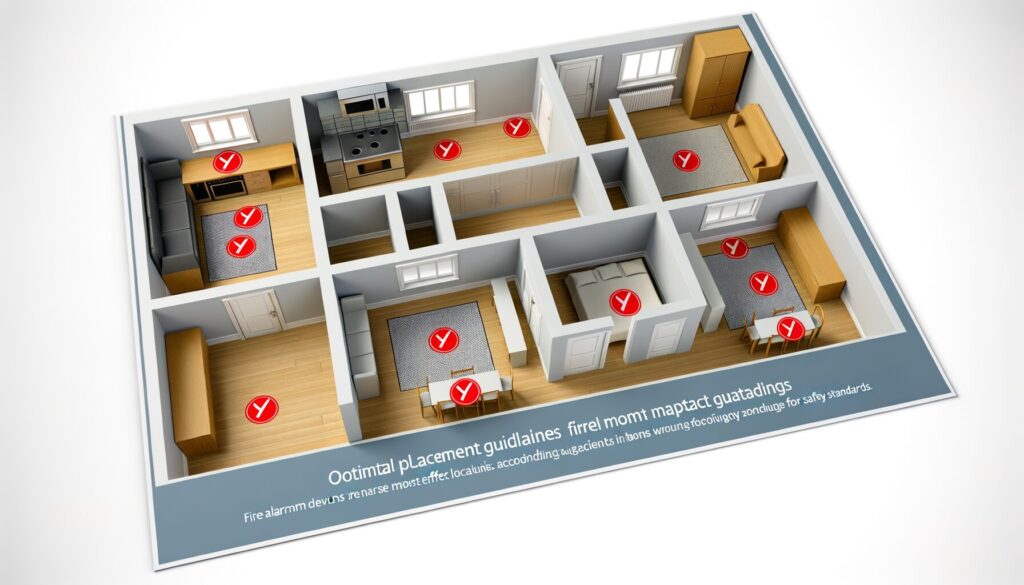
Fire Alarm Device Placement Guide
Fire alarm device placement is one of the most important determinants of system performance in real-world conditions. Even a fully compliant fire alarm system can be undermined by poor detector location, obstructed audibility, or notification appliances installed where occupants will not see or hear them. For property owners, developers, architects, and contractors in Ontario, device placement must be coordinated early with the building layout, mechanical design, ceiling details, and code-driven fire safety objectives. A well-executed design also reduces rework during construction and supports a smoother inspection and verification process.
In Ontario, placement decisions are generally informed by the Ontario Building Code (OBC), applicable CAN/ULC standards (including CAN/ULC-S524 for installation and CAN/ULC-S537 for verification), and the project’s fire alarm shop drawings and sequence of operation. The Authority Having Jurisdiction (AHJ) may also apply local expectations. The following guide outlines practical placement considerations that help align life safety intent with constructible, verifiable installation.
Start with a Placement Strategy: Zones, Occupancies, and Fire Safety Objectives
Before locating any devices, the design team should confirm key foundational items:
- Occupancy and hazard profile: residential, assembly, mercantile, industrial, care, or mixed-use conditions influence detection and notification needs.
- Building geometry: ceiling heights, atriums, interconnected suites, mezzanines, and open-to-below spaces affect smoke movement and audibility.
- Fire compartments and fire separations: device zoning and annunciation should reflect fire-rated separations and logical response areas.
- Emergency power and survivability: routing and placement must support circuit integrity, accessibility, and maintainability.
These factors shape device counts, circuiting, and locations, and they also influence supporting elements such as annunciators, relays, and interfaces to smoke control, hold-open devices, elevator recall, and door hardware.
Manual Pull Stations: Visibility, Access, and Exit Path Logic
Manual stations are most effective when installed where occupants naturally move during egress. Common placement principles include:
- At exits and exit access routes: near principal exit doors and within proximity to exit paths so they are easy to find during an emergency.
- At floor-level egress points: near stairwell entrances and major transitions (for example, from tenant space to common corridor).
- Unobstructed and accessible: avoid locations behind door swings, millwork, or security turnstiles; coordinate with barrier-free design requirements.
- Durable in high-traffic areas: protect against impact where carts or equipment move, without compromising accessibility.
For multi-tenant and mixed-use projects, coordinate pull station placement with demising walls and future tenant fit-outs so that required devices remain within the correct area and accessible after occupancy changes.
Smoke Detectors: Ceiling Conditions, Air Movement, and Avoiding Nuisance Alarms
Smoke detector placement is highly sensitive to ceiling configurations and air patterns. While code and standard spacing rules are essential, constructability and mechanical coordination are equally important. Consider the following:
Ceiling type and geometry
- Flat ceilings: place detectors so that coverage patterns are maintained and devices are not blocked by bulkheads, beams, or dropped soffits.
- Sloped or peaked ceilings: locate detectors where smoke is expected to accumulate; coordinate with architectural ceiling lines.
- Exposed structure: with open web joists or deep beams, confirm that detector type and placement are appropriate for stratification and air pockets.
Mechanical influences
- Avoid direct airflow: do not place detectors too close to supply diffusers or return grilles, where air streams can dilute smoke or cause false alarms.
- Coordinate with HVAC zoning: mechanical shutdown and smoke control interfaces may require detectors in specific locations to support the sequence of operation.
- Humidity and dust: in locations like loading areas, workshops, or parking-adjacent spaces, select suitable technologies and positions to reduce nuisance alarms.
Where detectors are used for specific functions (such as elevator recall, smoke control initiation, or door release), their placement should be aligned with the intended cause-and-effect, not only general area coverage.
Heat Detectors: High-Temperature and Challenging Environments
Heat detectors are commonly used where smoke detection is not suitable due to steam, cooking by-products, dust, or expected aerosol contamination. Placement considerations include:
- Proximity to heat sources: avoid installing too close to unit heaters, radiant panels, or process equipment unless required by the design, as this can cause unwanted activation.
- Ceiling height impacts: verify listed spacing limitations for the chosen device type; higher ceilings may require adjustments.
- Environmental ratings: confirm suitability for unconditioned spaces, including vestibules, garages, and service rooms where temperature swings are common in Ontario.
Audible and Visual Notification: Coverage, Ambient Noise, and Sightlines
Notification appliance placement should be coordinated with room layouts, finishes, and expected occupancy. Proper placement reduces dead spots and improves intelligibility where voice systems are used.
Audible devices (horns, speakers)
- Ambient noise basis: locate devices to achieve required sound levels above typical background noise, particularly in mechanical rooms, gyms, restaurants, and industrial bays.
- Room geometry and doors: sound does not reliably pass through closed doors; ensure rooms requiring notification have appliances within them when needed by design criteria.
- Voice systems: coordinate speakers to avoid excessive reverberation and to support message clarity in corridors, lobbies, and large open areas.
Visual devices (strobes)
- Sightline coverage: place strobes where they are visible from expected occupant positions; avoid concealment behind columns, shelving, or deep alcoves.
- Mounting height and lens orientation: coordinate with architectural elevations, glazing, and millwork to maintain visibility.
- Special spaces: include washrooms, change rooms, and amenity spaces where occupants may not hear audible signals clearly.
For suites and residential portions of mixed-use buildings, coordinate in-suite notification devices with interior design elements and future furniture layouts to minimize obstruction and maintain effective signaling.
Fire Alarm Control Panel, Annunciators, and Remote Indicators
Core system components must be placed for accessibility, visibility to responders, and maintainability:
- Fire alarm control unit and transponders: locate in dedicated or suitable service areas with required clearances and environmental conditions.
- Annunciators: place at main entrances or locations intended for fire department response, with clear visibility and unobstructed access.
- Remote indicators: use where detectors are located in concealed spaces or above inaccessible ceilings, enabling identification and servicing without invasive access.
Early coordination with electrical rooms, security, and base building design helps prevent late-stage relocations that can impact wiring routes, circuit loading, and verification readiness.
Common Placement Pitfalls to Avoid
- Devices obstructed by architectural elements: bulkheads, acoustic clouds, signage, and decorative lighting can block strobes or interfere with detector operation.
- Last-minute ceiling changes: shifting to a different ceiling system can alter device mounting methods and coverage assumptions.
- Poor coordination with sprinkler and mechanical trades: congested ceiling zones can force suboptimal placements that trigger deficiencies during verification.
- Inadequate access for maintenance: devices installed above fixed millwork or over hard-lid ceilings without access panels create long-term service issues.
Closing Considerations
Effective fire alarm device placement is a coordinated engineering and construction exercise that balances code compliance, system performance, and practical site conditions. With early interdisciplinary coordination and careful attention to ceiling geometry, airflow, audibility, and visibility, projects can achieve reliable, verifiable life safety outcomes. Where complex building layouts, mixed-use conditions, or integrated fire protection features are involved, engineering consulting services in Ontario can support clear documentation, coordinated drawings, and alignment with verification requirements.